
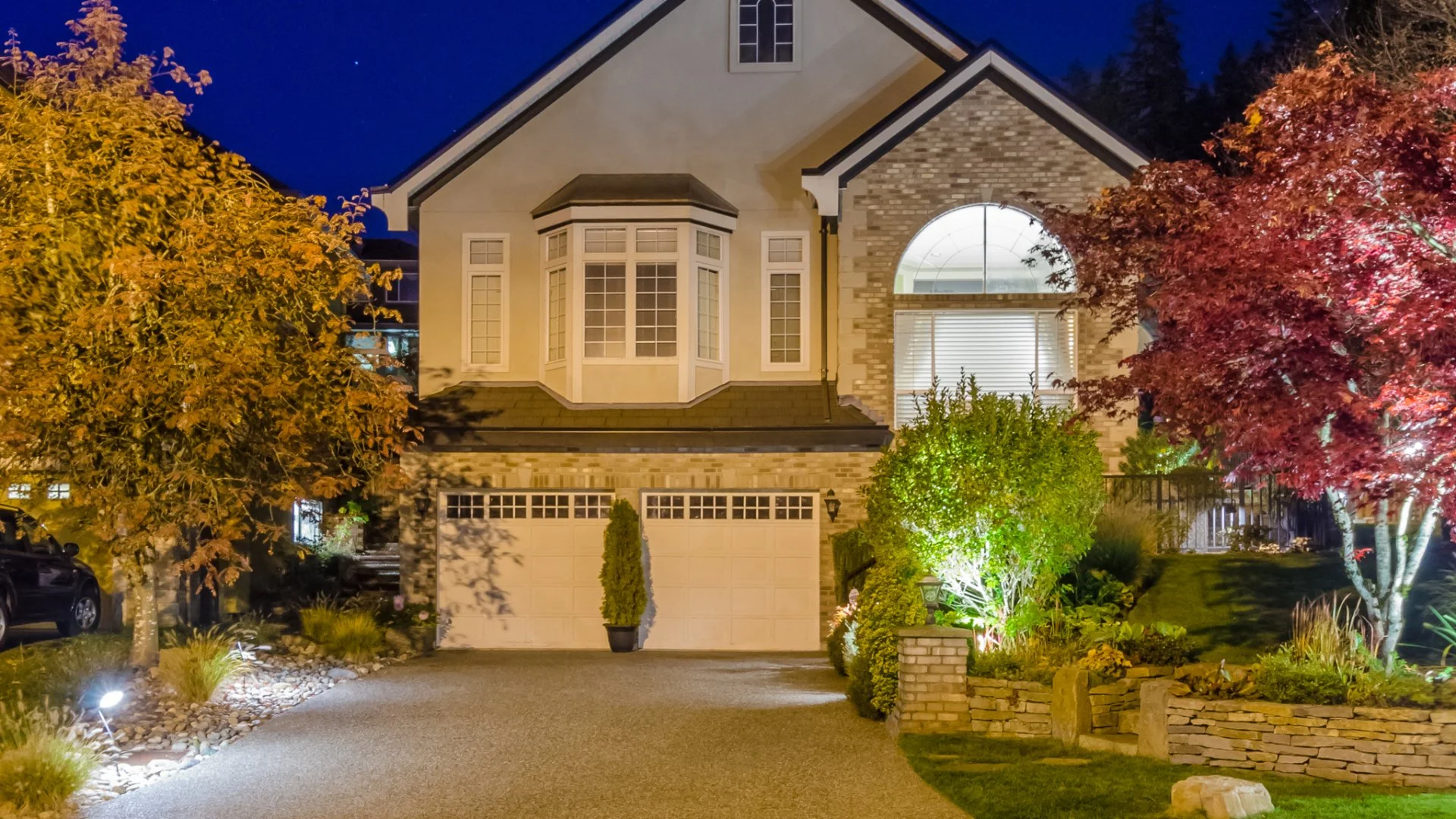
Landscape Lighting Timer Habits Before Long Guest Evenings Across Westchester and Greenwich
Long guest evenings across Harrison, White Plains, and Greenwich depend on more than bulb wattage. Timer zones, dusk offsets, and which path lights actually reach tread noses decide whether people relax at the table or hesitate on the last step. This page stays with lighting habits you can verify before graduation traffic and summer dinners stack on the calendar. Pair it with outdoor evening prep when you want the wider hardscape and pest context in one pass.
Why timers matter more than fixture count
A well lit patio can still feel unsafe if path zones turn on ten minutes after guests arrive. Transformer schedules that treat every circuit the same often leave arrival walks dark while accent trees glow for nobody. Walk your lot once at the hour you expect people to park. Note which fixtures are on, which are still warming up, and where shadows stack at the grill threshold.
Most residential systems use a central transformer with multiple zones. Zone one might be path lights along the drive. Zone two might be uplights on specimen trees. Zone three might be deck or kitchen counters. If all three share one on time without stagger, you either waste power on trees before anyone walks the path or you blind neighbors with counter brightness while the front walk is still black.
Landscape lighting service can remap zones, adjust photocell sensitivity, and set dusk offsets that match how your street actually goes dark. Tree canopy, porch overhangs, and tall hedges change how much sky reaches a sensor. A timer set last fall may read twilight differently once leaves fill in.
Dusk offset and the arrival path test
Photocells and astronomical timers both need a realistic offset. If lights snap on only after full dark, guests who arrive at seven thirty in late spring still cross grass in flat gray light. Test three evenings in a row at your expected dinner hour. Stand at the curb without your phone flashlight and walk to the patio. Mark any tread that disappears before the next fixture picks up.
Offset too early wastes energy and can annoy neighbors who see your uplights while they still have daylight chores. Offset too late is the failure guests remember. Aim for path continuity first, then accent scenes. People forgive dim tree lighting. They do not forgive a missing step.
In Stamford and Larchmont, street trees and porch depth vary block by block. Copy a neighbor’s offset only if your sensor sits in similar open sky. Otherwise set your own offset from the arrival path test, not from a default printed on the transformer box.
Zone schedules for quiet nights versus full tables
Many homeowners want two moods: low light for weeknight dinners and fuller brightness when relatives visit. If your system supports multiple programs or smart control, label them in plain language on the panel inside the garage. Future you should not guess which dial means patio only.
A practical split looks like this. Program A runs path and step fixtures plus one grill counter wash. Program B adds tree uplights, water feature accents, and any string or bistro circuits on the terrace. Run Program A most nights. Switch to Program B only when guest count justifies the extra glare check toward property lines.
Document which program you used on nights when someone tripped or when a neighbor mentioned glare. That log helps estimators faster than saying lights feel wrong. Bellantoni crews often find a single zone overpowering a path because Program B was left on after a party.
Fixture aim after spring growth
Shrubs and perennials grow into beam paths every spring. A fixture that cleared a boxwood skirt in March may hit leaves by late spring, throwing a hot spot on siding instead of the walk below. Walk the same arrival path in daylight and note plant tips within two feet of each fixture head.
Trim lightly for clearance or adjust stake angle a few degrees. Aggressive pruning solely for light can leave holes guests see at noon. Balance horticulture and beam path. If a fixture moved when a mower bumped it, reset the stake before you blame the bulb.
Wet stone reads darker than dry stone at dusk. If rain is in the forecast for your first big outdoor dinner, run Program B once on a damp evening and check tread contrast. Glare on wet patio stone is often reflection and angle, not missing wattage.
Transformer location, voltage drop, and summer load
Long wire runs to distant corners of the lot lose voltage. Fixtures at the end of a line look dim or amber compared with heads near the transformer. If you added path lights last year without checking tap settings, summer length nights expose the mismatch when everything runs four hours longer than in winter.
Open the transformer cabinet in daylight. Note tap numbers, fuse condition, and whether photocell eyes are dusty or shaded by a new shelf. Loose connections corrode faster near coast air in Rye and Greenwich waterfront pockets. Tighten only with power off and follow manufacturer guidance.
If you plan new outdoor kitchen counters or a fire feature with dedicated circuits, size the transformer before you order fixtures. Adding taps to an already maxed unit dims the whole system on the night you need even path light most.
Linking lighting habits to the wider outdoor living plan
Lighting never lives alone. Irrigation overspray on walks changes how stone reflects at night. Tall lawn at the terrace edge casts shadows path lights cannot beat until mowing height drops. Tick and mosquito habitat along the perimeter still drives where guests stand even when paths look cinematic.
Use the spring outdoor safety quiz if you are unsure whether lighting or pests should lead budget this season. The outdoor living hub collects patios, walks, lighting, and kitchens so one estimator can see how timer habits fit a larger refresh.
When you call, send a short dusk video from the street to the table, the timer settings you use today, and the date of your first long guest evening. That trio beats a vague request to fix outdoor lights before summer.
Quick reference list
- Walk the arrival path at your real dinner hour three evenings in a row.
- Separate path zones from accent tree zones in timer programs.
- Adjust dusk offset after spring leaf out, not only at install.
- Check fixture aim where shrubs grew into beam paths.
- Test wet stone glare before the first long guest evening.
- Label transformer programs so weeknight and party modes stay clear.
Calm timer habits before the calendar fills
Long guest evenings reward small habits: path continuity first, accent second, offsets tested at the hour people actually arrive. You already know which walk everyone uses with a plate in one hand. Use that path as the scorecard for timer zones and fixture aim before warm weekends stack. Tell us your town and your first big outdoor date so lighting crews can align with the rest of your outdoor living plan across Westchester County and Fairfield County.
Ready to Reset Your Lighting Schedule?
Tell us your town, your timer setup, and your first long guest evening. We will route outdoor living and lighting teams as needed.